How to Organise Document Feedback
A practical structure for collecting and using reviewer feedback without losing track of it.
Document review & approval software · One-time packages · Digital delivery
How to design a workflow that reflects the way your documents are actually reviewed.
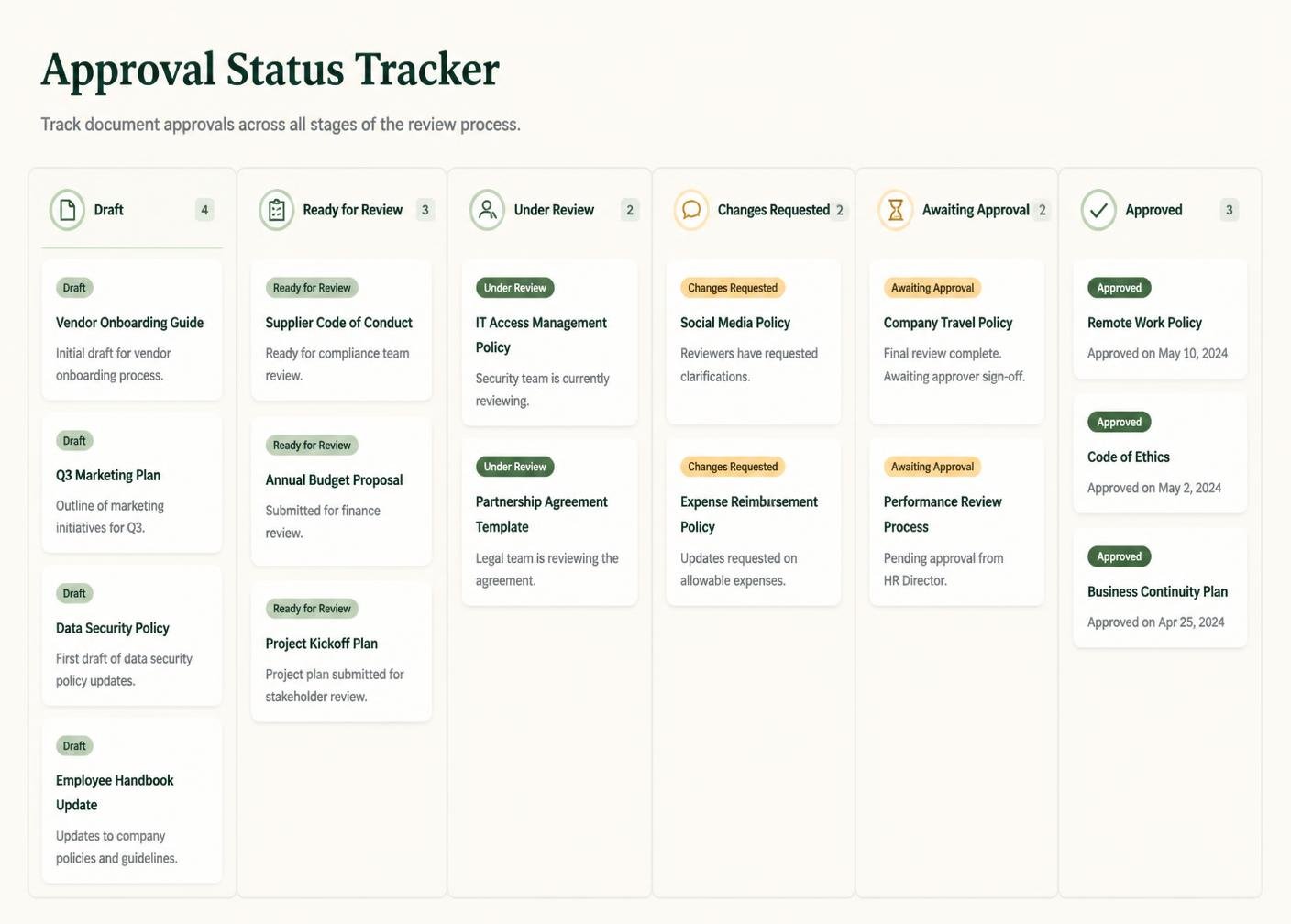
Before choosing statuses, write down what actually happens to a document from first draft to sign off in your business. Most workflows have four to six genuine stages; anything longer is usually duplicating a stage under a different name.
Draft, Ready for Review, Under Review, Changes Requested, Revised, Awaiting Approval, Approved and Archived cover almost every situation a small team or freelancer will meet. Resist the urge to add a status for every exception.
Every status should have an obvious answer to whose desk is this on. If nobody is clearly responsible for a document sitting in Under Review, it will sit there far longer than it should.
Define, in writing, what has to happen before a document can move from one status to the next. This removes ambiguity about whether something is genuinely ready to progress.
A workflow only works if everyone involved can see where a document currently sits. Make status visible to reviewers and clients rather than keeping it in your head.
Run one real document through the full workflow before rolling it out across all your work. This usually surfaces one or two stages that need adjusting.
A workflow that suited three clients may not suit thirty. Review it every few months and simplify anything that has become unnecessary friction.
A clear review process becomes easier to sustain once there is a structure around it: defined approval stages, organised reviewer feedback, tracked versions and useful revision notes. ApproveTrail organises that information; the review and approval decisions themselves always remain with you and your reviewers.
This article is general information about document-review practice. It is not legal advice and does not constitute document or signature certification.
A practical structure for collecting and using reviewer feedback without losing track of it.
Keeping track of drafts and revisions so nobody works from the wrong copy.
What each stage in a typical approval process should represent.
Compare the seven ApproveTrail packages and choose the level that matches your reviewers, document volume and approval requirements.